Table of Contents
- What Is a Floating TV Stand?
- Benefits of a Floating TV Stand
- Types of Floating TV Stands
- How to Choose the Right Floating TV Stand
- Top Materials Used in Floating TV Stands
- How to Install a Floating TV Stand Step by Step
- Floating TV Stand Ideas for Every Room
- Cable Management Tips for a Clean Look
- Floating TV Stand vs Traditional TV Cabinet
- Best Floating TV Stands by Budget
- Common Mistakes to Avoid
- How to Style Your Floating TV Stand
- Legal and Safety Considerations
- Conclusion
- Frequently Asked Questions
🚀 Stop overpaying for TV — save up to 80% today!
Try Best IPTV Services – 33,000+ channels + 140,000 movies & series.
👉 View plans
If you are tired of bulky, floor-hugging furniture dominating your living room, a floating tv stand could be the game-changer you have been looking for. Wall-mounted media units have surged in popularity over the past decade, and for good reason — they create instant visual space, modernize any room’s aesthetic, and provide clever hidden storage, all without occupying a single square foot of floor area. Whether you live in a compact studio apartment or a spacious family home, understanding how to choose, install, and style a floating TV stand can genuinely transform how your living space feels and functions.
In this comprehensive guide, we cover everything from what a floating TV stand actually is, to the different materials and styles available, step-by-step installation advice, budget recommendations, and expert styling tips. By the end, you will have all the knowledge you need to pick the perfect wall-mounted media console for your home.
What Is a Floating TV Stand?
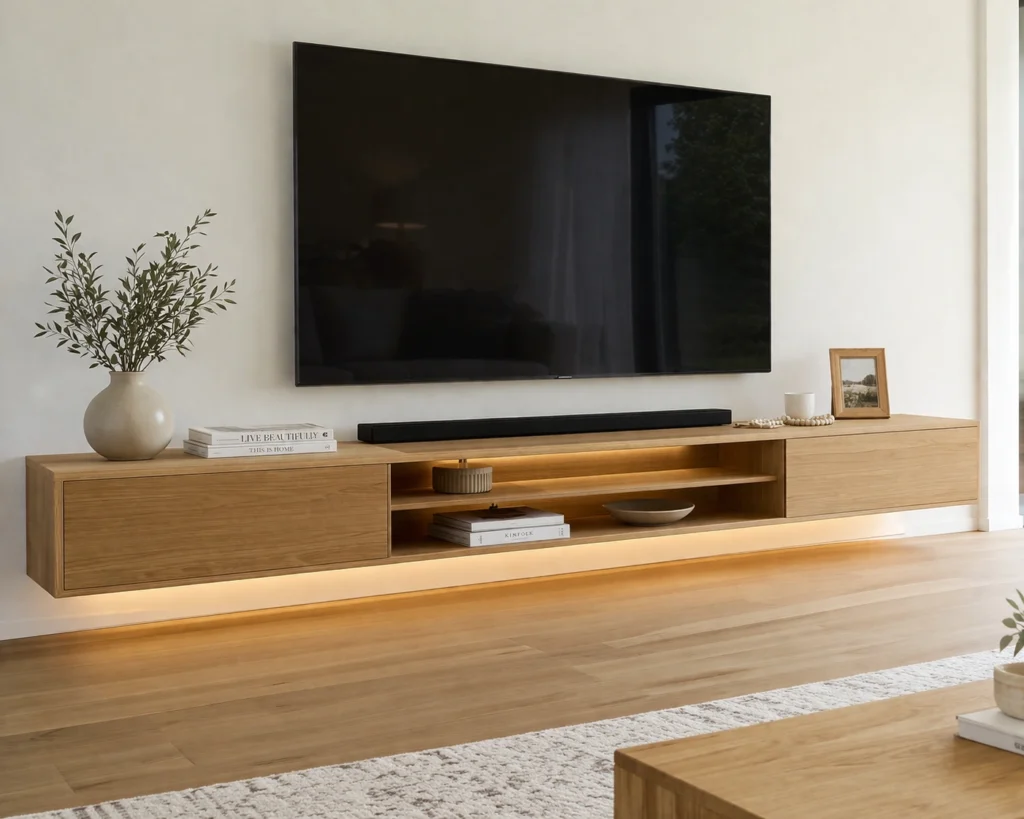
A floating tv stand — also known as a wall-mounted TV unit, floating media console, or wall-hung TV cabinet — is a piece of furniture that is fixed directly to the wall rather than resting on the floor. Unlike a traditional TV cabinet with legs or a freestanding entertainment center, the floating design gives the impression that the unit is suspended in mid-air, creating a clean, airy, and ultra-modern look.
According to television set furniture history on Wikipedia, the design of TV-related furniture has evolved dramatically alongside television technology itself. As flat-screen TVs replaced bulky CRT models, furniture designers responded with slimmer, more architecturally integrated solutions — and the wall-mounted floating unit became a defining piece of contemporary interior design.
At its core, a floating media console performs the same job as any TV stand: it provides a surface or enclosed space for your media devices, cables, remotes, and decorative items. The key difference is the installation method — studs, wall anchors, or a dedicated mounting rail system hold the unit securely against the wall, leaving the floor completely clear beneath it.
Key Characteristics
- Attached directly to the wall via brackets, rails, or screws into studs
- No floor-touching legs or base
- Available with open shelves, closed drawers, or a combination of both
- Height can usually be customized during installation
- Available in a wide range of widths, from 40 cm to over 200 cm
Benefits of a Floating TV Stand
The growing demand for a wall-mounted floating unit is no accident. These pieces offer a compelling combination of aesthetic and practical advantages that traditional freestanding furniture simply cannot match. Here is a deeper look at why so many homeowners are making the switch.
1. Creates the Illusion of Space
When the floor is visible beneath your media furniture, the eye reads the room as larger. This is especially valuable in smaller living rooms or open-plan spaces where visual flow is essential. A floating tv stand literally clears the ground plane, making the room feel open and uncluttered even in tighter spaces.
2. Easier Cleaning
One of the most underrated benefits of a floating media console is how easy it makes floor cleaning. No legs means no awkward vacuuming around feet or chasing dust bunnies into hard-to-reach corners. Simply run a mop or robot vacuum straight underneath — a surprisingly significant quality-of-life improvement.
3. Full Height Customization
Unlike freestanding TV furniture, a wall-hung TV cabinet allows you to set the exact height you prefer. Whether you want to position your screen at perfect eye level for seated viewing or align the unit with surrounding architectural elements like windows and doorframes, a floating design puts you in full control.
4. Modern, Timeless Aesthetic
Few furniture pieces signal “considered interior design” as clearly as a well-chosen floating TV unit. The clean horizontal line it creates along the wall, combined with its apparent weightlessness, works beautifully in Scandinavian, minimalist, mid-century modern, and even industrial design schemes.
5. Improved Cable Management
Many floating units include integrated cable channels or back panels with pre-drilled holes, making it far simpler to route wires neatly behind the wall or inside the unit itself. The result is a tidy, professional-looking media wall that does not betray the tangle of cables hidden within. Explore more tips at our help center.
6. Better for Homes With Children and Pets
Elevating your media equipment off the floor keeps cables, remotes, and devices safely out of reach of toddlers and curious pets. It also reduces the risk of furniture being knocked or toppled — a significant safety advantage over tall freestanding entertainment centers.
Types of Floating TV Stands
When you begin shopping for a floating tv stand, you will quickly discover that the market is broad and varied. Understanding the main categories will help you narrow down your options efficiently.
Open Shelf Floating Units
These are the most minimal option — a single horizontal shelf or a set of staggered open shelves mounted directly to the wall. They work well for displaying decorative objects, gaming consoles, and soundbars alongside your TV. The open design does, however, mean more visible clutter if storage discipline is not maintained.
Closed Cabinet Floating Units
Featuring doors — push-to-open, soft-close, or slatted — closed units hide your media equipment and any unsightly cables behind clean panels. These are ideal for living rooms where a clutter-free look is paramount. Many come with ventilation gaps to prevent device overheating.
Combination Units
A mix of open shelving and closed drawers or doors, combination floating media consoles are the most versatile option. You get display space for decorative pieces and hidden storage for devices, discs, and cables — the best of both worlds.
Full Media Wall Units
For those who want a truly dramatic statement piece, a full wall-to-wall floating media unit integrates the TV into a designed surround of shelving, cabinetry, and sometimes even integrated lighting. These are usually custom-made and represent the premium end of the floating TV stand market.
Floating TV Stand with LED Lights
Increasingly popular, these units include integrated LED strip lighting beneath or behind the console, creating a soft ambient glow that enhances the viewing atmosphere and adds a contemporary, premium feel to the room.
How to Choose the Right Floating TV Stand
Selecting the perfect floating tv stand involves balancing several factors: the size of your TV, the dimensions of your wall, your storage needs, your interior style, and your budget. Here is a structured approach to making the right decision.
Step 1: Measure Your TV and Wall
Begin by measuring your TV screen size — specifically the width of the TV including its stand or frame. A good rule of thumb is that your floating media console should be at least as wide as your TV, and ideally 15–30 cm wider on each side for visual balance. Also measure the available wall width, noting any obstacles like light switches, sockets, or windows.
Step 2: Determine Your Viewing Height
The centre of your TV screen should ideally be at eye level when you are seated — typically between 100 cm and 120 cm from the floor. Work backwards: if your TV is 60 cm tall, the top of your floating unit should sit at around 90–100 cm to position the centre of the screen correctly.
Step 3: Assess Your Storage Needs
How many devices do you need to accommodate? A typical living room media setup might include a set-top box, games console, Blu-ray player, soundbar, and router. Count your devices, estimate the space they need, and choose a floating unit with enough internal compartments or shelves to house them all comfortably.
Step 4: Match Your Interior Style
Consider the existing furniture and finishes in your room. A white high-gloss floating unit looks stunning in a contemporary, monochrome space but may clash with a rustic, natural-wood interior. Conversely, a solid oak floating console adds warmth and texture to Scandinavian or farmhouse schemes. Matching the finish to existing furniture handles, skirting boards, or flooring creates a cohesive, designed look.
Step 5: Check Your Wall Type
This is critical. A floating TV stand must be securely fastened to the wall — and the method differs significantly between solid masonry walls (brick, concrete, stone) and hollow partition walls (stud walls, drywall). Always check what type of wall you have before purchasing, as some lighter units only work safely with stud-wall fixings, while heavier solid wood units require masonry anchors.
📺 Upgrade your home entertainment setup today!
Pair your new floating TV stand with premium streaming from Best IPTV Services — 33,000+ live channels and 140,000+ on-demand titles.
👉 See all IPTV plans
Top Materials Used in Floating TV Stands
The material of your floating tv stand affects not just its appearance but also its durability, weight capacity, and price point. Here is a breakdown of the most common materials on the market.
Solid Wood
Solid wood — oak, walnut, pine, teak — is the premium choice. It is heavy, durable, and develops character over time. A solid oak floating console is a genuine long-term investment that can outlast a home renovation. The natural grain variation means every unit is subtly unique. The trade-off is higher cost and greater wall-fixing demands due to weight.
MDF (Medium-Density Fiberboard)
MDF is the most common material in mid-range floating TV units. It is smooth, easy to paint or veneer, and produces very clean lines and edges — ideal for the sharp, contemporary look many buyers want. High-quality MDF floating consoles with a lacquered finish are virtually indistinguishable from solid wood at a glance. They are, however, susceptible to water damage and less resistant to knocks than solid timber.
Plywood
Plywood is increasingly popular in designer and bespoke floating units. It is lighter than solid wood, extremely strong for its weight, and — when left with an exposed edge — has a distinctive, architecturally raw aesthetic that suits industrial and contemporary interiors.
Glass and Metal
Some floating media units incorporate tempered glass shelving or metal frames for an ultra-modern, industrial look. Metal-framed open floating shelves are particularly popular in loft-style apartments. Glass surfaces, while stunning, require regular cleaning and are more fragile.
Reclaimed Wood
For buyers who prioritize sustainability and character, reclaimed or recycled wood floating TV stands have real appeal. Each piece tells a story through its knots, grain patterns, and patina. These units pair beautifully with exposed brick walls, raw plaster, and natural textiles.
How to Install a Floating TV Stand Step by Step
Installing a floating tv stand is a satisfying DIY project that most competent homeowners can complete in a few hours. Follow these steps carefully to ensure a safe, level, and secure result.
Tools You Will Need
- Pencil and measuring tape
- Spirit level
- Power drill with masonry or wood drill bits (depending on wall type)
- Wall plugs and screws (often included with the unit)
- Stud finder (for stud/drywall walls)
- Two helpers (for heavier units)
Step 1: Find and Mark Your Studs or Wall Plugs
If you have a stud wall, use a stud finder to locate the vertical timber frames hidden behind the plasterboard. Mark their positions clearly with a pencil. If you have a masonry wall, you can fix into the wall at any point, but use appropriately rated wall plugs for the weight of the unit.
Step 2: Mark the Mounting Rail Position
Hold the included mounting rail (or bracket) against the wall at your desired height. Use a spirit level to confirm it is perfectly horizontal, then mark the fixing hole positions with a pencil. Double-check the marks are level before drilling — a crooked floating unit is very noticeable.
Step 3: Drill and Fix the Mounting Rail
Drill the marked holes to the depth specified by your wall plugs. Insert the wall plugs, align the mounting rail, and screw it firmly into place. Give it a firm tug to confirm it is absolutely secure before hanging any furniture from it.
Step 4: Hang the Unit
With a helper (or two for large units), carefully hang the floating console onto the mounted rail. Most systems use a hook-and-rail mechanism that lets you slide the unit along and position it centrally. Once satisfied with the position, tighten any locking screws to prevent movement.
Step 5: Level and Finish
Place a spirit level on top of the installed unit and make any final adjustments. Fill any visible drill holes beside the unit with filler, touch up with paint, and proceed to route your cables through the built-in management channels. If you need additional installation guidance, visit our support page.
Tip: Always check the maximum load rating of your floating TV stand and never exceed it. Most standard units safely support 30–50 kg; premium solid wood units can hold significantly more.
Floating TV Stand Ideas for Every Room
A well-chosen floating tv stand can work in almost any room of the home — not just the living room. Here are some creative ideas tailored to different spaces.
Living Room
The living room is the natural home for a floating media console. Consider a wide, low-profile unit in a warm walnut or white oak finish, paired with a textured accent wall behind it — plastered, panelled, or even tiled. Adding an LED strip light beneath the unit creates a gorgeous ambient glow for evening viewing.
Bedroom
Mounting a slim floating console in the bedroom keeps the floor clear and gives the room a hotel-suite quality. Opt for a narrower unit — 80–120 cm wide — with a closed door or drawer design to keep remotes and devices neatly hidden. Position it at the foot of the bed for comfortable seated or lying-down viewing.
Home Office / Study
A floating shelf system in a home office can house a monitor, media devices, and decorative books or plants simultaneously. An industrial-style metal and plywood floating unit looks particularly striking against a brick or concrete feature wall in a study or creative workspace.
Children’s Room
In children’s bedrooms and playrooms, a floating media unit keeps screens and gaming consoles elevated and safe from floor-level accidents. Choose a colourful or white-painted MDF unit that can be repainted as tastes change. Our about us page explains more about family-friendly entertainment solutions.
Kitchen / Diner
Wall-mounted floating shelving in kitchen-diners can double as a display surface for a small TV plus cookbooks, plants, or pottery. Use a unit with a food-safe or easy-wipe finish to withstand the kitchen environment.
Cable Management Tips for a Clean Look
Even the most beautiful floating tv stand will look messy if cables are allowed to dangle visibly down the wall. Here are the most effective strategies for achieving a truly clean, professional result.
- In-wall cable routing: The cleanest solution — thread cables through the wall cavity behind the floating unit, exiting at a socket or conduit lower down. Requires cutting into the wall and is best done by an electrician.
- Cable raceways: Paintable PVC channels that attach to the wall surface and conceal cables running from the unit to sockets below. They are a non-invasive, renter-friendly alternative to in-wall routing.
- Trunking behind the unit: Use the gap between the back of the floating console and the wall to run cables vertically. Many units have pre-drilled holes in their back panels specifically for this purpose.
- Wireless HDMI transmitters: For the ultimate cable-free look, wireless HDMI systems transmit audio and video signals wirelessly between your devices and TV, eliminating the need for visible cables almost entirely.
- Cable ties and velcro straps: Even if cables must be somewhat visible, bundling them neatly with cable ties and routing them consistently in one direction dramatically reduces visual clutter.
Floating TV Stand vs Traditional TV Cabinet
When deciding between a floating tv stand and a conventional freestanding TV cabinet, it helps to compare them directly across the factors that matter most to homeowners.
| Factor | Floating TV Stand | Traditional TV Cabinet |
|---|---|---|
| Space perception | Opens up floor, room feels larger | Occupies floor space, can feel heavy |
| Installation | Requires wall fixing — more effort | Simply place on floor — easier |
| Cleaning | Easy — clean under freely | Awkward around legs and base |
| Height adjustment | Fully customizable during install | Fixed by the manufacturer’s design |
| Portability | Difficult to move once installed | Easy to move or reposition |
| Aesthetics | Modern, airy, architectural | Traditional, grounded, familiar |
| Storage capacity | Moderate — constrained by wall space | Can be very large with drawers |
| Suitability for renters | May require landlord approval | No structural modification needed |
For most homeowners in owner-occupied properties who value modern design and want to maximize their sense of space, the wall-mounted floating unit wins convincingly. For renters or those who regularly move furniture, the traditional cabinet may be a more practical choice.
Best Floating TV Stands by Budget
The market for a floating tv stand spans an enormous price range — from budget flat-pack options to fully bespoke carpentry. Here is a breakdown of what to expect at each price tier.
Budget: Under $150 / £120
At this price point, you will find MDF or particleboard floating units from flat-pack retailers like IKEA (the Besta range is a perennial favourite), online marketplaces, and budget furniture brands. These units are functional and available in clean, simple finishes — white, grey, and light wood being most common. They are perfectly adequate for lightweight media setups and smaller TVs. Build quality is acceptable, though the finish can chip with heavy use.
Mid-Range: $150–$500 / £120–£400
The mid-range is where the value really begins to shine. Here you will find solid MDF units with higher-quality lacquered finishes, engineered wood veneers that convincingly mimic real timber, soft-close drawers and push-to-open doors, and more generous internal dimensions. Many mid-range floating media consoles also include built-in LED strip lighting and better cable management features. This is the sweet spot for most homeowners.
Premium: $500–$1500+ / £400–£1200+
Premium floating TV stands are typically solid wood — oak, walnut, or ash — sometimes with live-edge details or custom staining. At this level, craftsmanship, joinery quality, and finish are exceptional. Many premium options are made to order in custom dimensions and configurations. These units are genuine long-term investments, combining furniture quality with architectural impact.
Bespoke / Custom
For a full media wall or a unit that fits a specific alcove perfectly, commissioning bespoke joinery is the ultimate option. Prices vary enormously by specification, but a full bespoke wall-to-wall floating media unit in solid oak could cost anywhere from $2,000 to $10,000 or more depending on complexity and region. The result, however, is a one-of-a-kind piece that perfectly integrates with your home’s architecture. Learn more on our IPTV plans page about how to complement any home entertainment setup.
Common Mistakes to Avoid
Even experienced DIYers make errors when installing a floating tv stand for the first time. Here are the most common pitfalls — and how to avoid them.
- Not checking wall type before purchase: The most critical mistake. A 40 kg solid oak unit installed on a single drywall partition using only plasterboard anchors is a recipe for disaster. Always identify your wall type first.
- Getting the height wrong: Once fixed, moving a floating unit requires re-drilling — messy and avoidable. Spend extra time measuring and marking the correct height before any drilling begins.
- Ignoring weight limits: Overloading a floating media console risks both damaging the unit and pulling the fixings out of the wall. Check the manufacturer’s load rating carefully.
- Forgetting about ventilation: Media devices generate heat. Placing them inside a closed floating unit without adequate ventilation leads to overheating and shortened device lifespans. Ensure there are ventilation gaps or holes in any closed-door unit.
- Overlooking cable planning: It is far easier to plan your cable routing before installation than to retrofit it afterward. Decide how you will manage cables before the unit goes up.
- Choosing aesthetics over practicality: A beautiful floating console that does not fit your devices, accommodate your storage needs, or work with your wall type is a poor investment regardless of how good it looks.
How to Style Your Floating TV Stand
A beautifully chosen floating tv stand deserves equally considered styling. The way you dress the open surfaces and surroundings of your media unit can elevate the entire room. Here are some designer-approved approaches.
The Rule of Three
Interior designers frequently use odd-numbered groupings for decorative displays — three objects of varying heights create visual rhythm and interest without looking cluttered. A tall plant, a mid-height sculptural object, and a low candle or book stack arranged together on an open floating shelf is a classic and enduringly stylish combination.
Embrace Negative Space
Resist the urge to fill every surface and shelf. Deliberately leaving some areas empty creates breathing room that makes the objects you do display look more intentional and curated. A floating media console that is 70% decorated looks far more sophisticated than one that is 100% packed.
Layer Lighting
Ambient LED strip lighting beneath a floating TV unit adds warmth and depth to the entire media wall. Complement this with table lamps, floor lamps, or wall-mounted picture lights in the same room zone to create a layered lighting scheme that is both functional and atmospheric.
Create a Gallery Wall Above
The wall space above a floating console is prime real estate for art and photography. A curated gallery wall of framed prints, mirrors, or even mounted plants can transform a simple media unit into a full feature wall that anchors the entire room’s design scheme.
Coordinate with Flooring
Because a floating TV stand leaves the floor visible, the relationship between the unit’s finish and your flooring becomes important. A warm oak floating console pairs beautifully with light wood flooring or polished concrete. A white or grey unit works well on virtually any floor type. Avoid finish clashes — a dark wenge unit on dark wood flooring can look muddy and undefined.
Legal and Safety Considerations
Before installing a floating tv stand, there are several important legal and safety factors to consider — particularly if you are renting your property or making significant structural changes.
Rental Properties
Most standard tenancy agreements require tenants to seek written permission from their landlord before making any alterations to the property, including wall fixings. Installing a floating TV stand in a rented property without permission could result in deductions from your security deposit or, in extreme cases, breach of contract claims. Always get written landlord consent before drilling.
Listed Buildings and Conservation Areas
If your property is a listed building or in a designated conservation area, even internal alterations may require specific consent from your local planning authority. Check your property’s status and consult your local council before proceeding with any wall-fixing work.
Electrical Safety
Before drilling into any wall, check for hidden electrical cables and plumbing pipes using a cable and pipe detector (available inexpensively from any hardware store). Drilling through a live cable or water pipe can cause serious injury or significant property damage. This step is non-negotiable.
Weight and Structural Integrity
Ensure that your chosen wall can safely support the combined weight of the floating unit and all the media equipment it will hold. If in any doubt, consult a qualified builder or structural engineer. For very heavy bespoke units, professional installation is strongly recommended.
Child Safety Standards
If children are present in the home, ensure that the floating unit is installed at a height that keeps devices, cables, and any potentially hazardous objects safely out of reach. Follow the manufacturer’s safety guidelines regarding maximum load and installation requirements. Visit our help center for additional safety guidance.
🎬 Your floating TV stand is set — now fill your screen with world-class content!
Best IPTV Services delivers 33,000+ live channels, sports, movies & series in stunning quality.
👉 Explore IPTV plans now
Conclusion
A floating tv stand is far more than a practical piece of furniture — it is a design statement that can fundamentally change how your living space looks and feels. By eliminating the visual weight of floor-standing furniture, revealing more of your floor, and creating a clean architectural line along your wall, a well-chosen floating media console brings a sense of calm, spaciousness, and modern sophistication that few other single purchases can achieve.
Throughout this guide, we have explored what floating TV stands are, the key benefits they offer, the different types and materials available, and how to choose and install one safely and successfully. We have also covered expert styling tips, common installation mistakes, budget breakdowns, and the legal considerations that protect you as a homeowner or tenant.
Whether you opt for a budget MDF unit from a flat-pack retailer or commission a bespoke full-wall solid oak media installation, the principles remain the same: measure carefully, fix securely, manage cables thoughtfully, and style with restraint. Do this, and your floating TV stand will be a feature of your home that you enjoy and appreciate every single day.
Ready to make the most of your new media setup? Explore the full range of options at Best IPTV Services and discover how to transform your home entertainment experience with premium streaming content to match your premium new furniture.
🌟 Don’t stop at the stand — upgrade your entire entertainment experience!
Join thousands of satisfied customers at Best IPTV Services for 33,000+ channels, ultra HD streaming, and no buffering.
👉 Get started today
Frequently Asked Questions
Can a floating TV stand support a heavy TV?
Yes, but the weight limit depends on both the unit itself and how securely it is fixed to the wall. Most floating media consoles are rated for 30–60 kg of combined load (unit contents plus devices). The TV itself is typically mounted directly to the wall on a separate bracket rather than sitting on the floating unit, which significantly reduces the load on the console. Always check the manufacturer’s stated weight capacity before purchasing.
Is a floating TV stand suitable for rental properties?
It can be, but you must obtain written permission from your landlord first. Most landlords will agree to wall fixings provided you commit to filling holes and repainting to the original condition when you leave. Use the minimum number of fixings required and document the wall condition before and after installation to protect your deposit.
How high should a floating TV stand be mounted?
The ideal mounting height positions the centre of your TV screen at approximately eye level when seated — typically 100–120 cm from the floor for most standard sofa heights. Since a floating TV stand usually sits beneath the mounted TV, position the top of the console at around 90–100 cm from the floor, then mount your TV directly above it at the appropriate height using a separate wall bracket.
What is the best material for a floating TV stand?
For durability and aesthetics, solid wood — particularly oak or walnut — is the premium choice and represents a genuine long-term investment. For a balance of quality and affordability, high-quality MDF with a lacquered or veneer finish is an excellent option. The best material ultimately depends on your budget, interior style, and the weight of equipment you need to store.
Can I install a floating TV stand on a drywall (stud wall)?
Yes, provided you fix into the timber studs behind the plasterboard rather than relying on plasterboard anchors alone. Use a stud finder to locate the studs, and position your mounting rail so that fixings go directly into at least two studs. This provides a secure, load-bearing connection capable of supporting a fully loaded floating media console.
Do floating TV stands come with cable management?
Many do. Most mid-range and premium floating units include pre-drilled holes in the back panel, cable channels along the rear edge, or removable back panels to allow cable routing. More advanced units offer integrated back-of-wall cable conduits. If your chosen unit does not include cable management, aftermarket solutions such as cable raceways or in-wall routing kits are readily available and easy to install.
What is the difference between a floating TV stand and a TV wall mount?
A TV wall mount is a bracket that attaches solely to the TV and fixes it directly to the wall — it provides no storage or surface area. A floating TV stand is a piece of furniture (with storage, shelves, or drawers) that is mounted to the wall but sits below the TV, providing a surface for media devices and decor. Many homes combine both: a wall-mounted TV bracket for the screen and a floating media console beneath it for storage.